
A Proven Approach to Industrial AI
We help manufacturing and industrial companies move from "we should do something with AI" to capturing measurable business value. Our approach is practical, collaborative, and designed to deliver results fast.
Talk to an ExpertWhat we do
AI doesn't start with technology - it starts with clarity.
We help industrial and OEM companies move from uncertainty to action by aligning AI with real business goals. Whether you want to improve factory performance, reduce downtime, or strengthen your service business, we meet you where you are and build from there.
Where you are today determines how we begin.
Set the direction - identify and align
You see the potential of AI, but you're unsure where to start or how to connect it to real challenges in production or the aftermarket.
That's where we begin.
We help you take a step back, connect the dots, and set a clear direction. You'll see examples from similar industrial companies, understand what's possible with the data you already have, and align on where AI can deliver the most value.
Our process
Leadership alignment & education
We start at the top.
A focused session with executives and operational leaders to unpack what AI really means for your factories, products, and service business. We identify your biggest opportunities using relatable industrial examples, not theory.
Leadership alignment and a clear view of how AI supports business and operational priorities.
Use case exploration
Next, we bring the business together.
Through cross-functional workshops, we map real challenges across production, maintenance, quality, supply chain, and service. We identify opportunities that can be turned into measurable results.
We score each idea by business impact and data readiness, narrowing the list to the best candidates for pilots.
A prioritized list of high-impact ideas - from process optimization to service intelligence - ready for validation.
Data feasibility & prioritization
Finally, we test reality.
We review the data behind the most promising ideas: MES, ERP, historian logs, PLC signals, CRM/service data, and maintenance records. We confirm what's possible today and what requires groundwork.
A practical roadmap for your first AI pilots, with a clear go/no-go foundation.
Two paths - one outcome
Every company starts differently. That's why this process can unfold in two complementary ways:
Company-wide perspective
For leadership teams defining how AI fits across production and service. We explore where AI can strengthen reliability, performance, decision-making, and aftermarket outcomes.
Example focus areas:
- Predictive maintenance across critical assets
- Quality and process optimization
- Installed base and warranty intelligence
- Reporting, forecasting, and automation
- Safety, compliance, and documentation AI
Operational or asset-level focus
For teams wanting to start small and prove value fast. We zoom in on a specific line, process, or asset type to identify bottlenecks and ask: Can AI fix that?
Example focus areas:
- Throughput and cycle-time optimization
- Anomaly detection for equipment performance
- Vision-based quality detection
- Energy and resource consumption analytics
- Parts and service demand prediction
Outcome: Whether strategic or operational, you'll see exactly where AI can create measurable value using the data you already have.
You'll walk away with
Why it works
We've run this process across industrial companies facing strong engineering cultures, complex operations, and uncertainty about where to begin.
It's fast, collaborative, and grounded in reality.
Because the goal isn't to "explore AI" - it's to turn clarity into measurable results.
Prove the concept - launch a focused pilot
Once the direction is clear, the next step is to prove the value. This is where ideas turn into evidence - where we test if AI can deliver measurable improvements before scaling.
A Proof of Concept is small, fast, and low-risk, but rich in learnings.
Because real confidence in AI comes from proof, not promises.
Our philosophy for industrial AI projects
Low risk, rapid learning, and measurable business value - built on proven results across manufacturing and OEM service
Because in industrial environments, the bar is simple: Does it improve reliability, quality, productivity, or customer outcomes?
Our philosophy when it comes to AI projects
What is a PoC?
Similar to how an OEM tests a component or process before scaling production, a Proof of Concept (PoC) validates an AI idea safely and quickly.
Purpose
- Validate technical feasibility
- Demonstrate measurable business value
- Test in a controlled, low-risk environment
The 4 Core Principles
Why most industrial companies are well-positioned for AI PoCs
Strong data footprint
Manufacturers and OEMs already capture valuable data - MES, historians, PLCs, sensors, ERP, CRM. The foundation for practical AI is already in place.
High-ROI use cases with proven feasibility
Predictive maintenance, quality detection, throughput optimization, and warranty intelligence have a strong track record.
Organizational readiness
Engineering and service teams already operate with a problem-solving mindset. This supports fast pilots focused on real business outcomes.
Three proof-of-concepts we run in industrials
The philosophy stays the same, but the focus depends on where AI creates the most value for your operation or installed base. Whether it's improving equipment reliability, optimizing line performance, or supporting your service teams, each PoC is designed to deliver measurable value fast.

Predictive Maintenance for Critical Assets
Detect early signs of component failure using sensor data, historian logs, and maintenance records
How we solve it
We combine sensor streams, historian data, and maintenance logs to predict component wear and failure risk before it impacts production or customers. We start with one critical asset type (e.g., compressors, pumps), validate with your experts, and outline how to scale.
High-level project plan
| Phase | Description | Key Deliverables | Duration |
|---|---|---|---|
| 1. Scoping & Data Audit | Identify critical assets, failure modes, data sources, and success metrics. | Asset & data inventory, KPIs, prioritized failure modes | 2–3 weeks |
| 2. Data Integration & Cleaning | Align historian, sensor, and CMMS data. Resolve gaps and inconsistencies. | Clean, structured dataset | 3–4 weeks |
| 3. Model Development & Validation | Train and test models predicting failures or abnormal patterns. | Predictive maintenance model + performance metrics | 4 weeks |
| 4. Pilot & Live Testing | Deploy model in shadow mode or limited scope. Compare predictions vs. real events. | Pilot dashboard + feedback | 4 weeks |
| 5. Review & Scale Decision | Evaluate ROI, accuracy, and operational fit. | Impact report + scale roadmap | 2 weeks |
You'll walk away with: A tested model that reduces unplanned downtime and is ready to scale across similar assets.
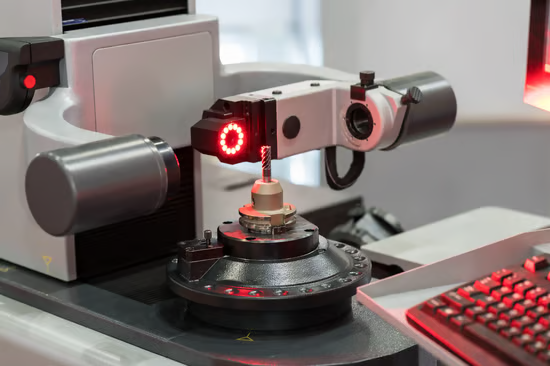
Vision-Based Quality Detection
Use computer vision to detect defects earlier and improve quality consistency
How we solve it
We use line-side images or inspection photos to train a computer vision model that flags defects and inconsistencies. Shadow-mode validation ensures accuracy before live use.
High-level project plan
| Phase | Description | Key Deliverables | Duration |
|---|---|---|---|
| 1. Problem Framing & Data Scoping | Define defect types, products, and quality KPIs. | Baseline quality metrics, data capture plan | 2 weeks |
| 2. Data Collection & Labeling | Gather representative images and label them with your quality team. | Labeled dataset | 3–4 weeks |
| 3. Model Development & Validation | Train and evaluate vision models. | Detection model + metrics | 4 weeks |
| 4. Shadow Testing on the Line | Compare model detections with operator findings. | Shadow test report | 3 weeks |
| 5. Operator Trial & Rollout Plan | Introduce model into inspection workflow. | Pilot results + rollout plan | 3 weeks |
You'll walk away with: A validated vision model that reduces scrap and improves quality consistency.
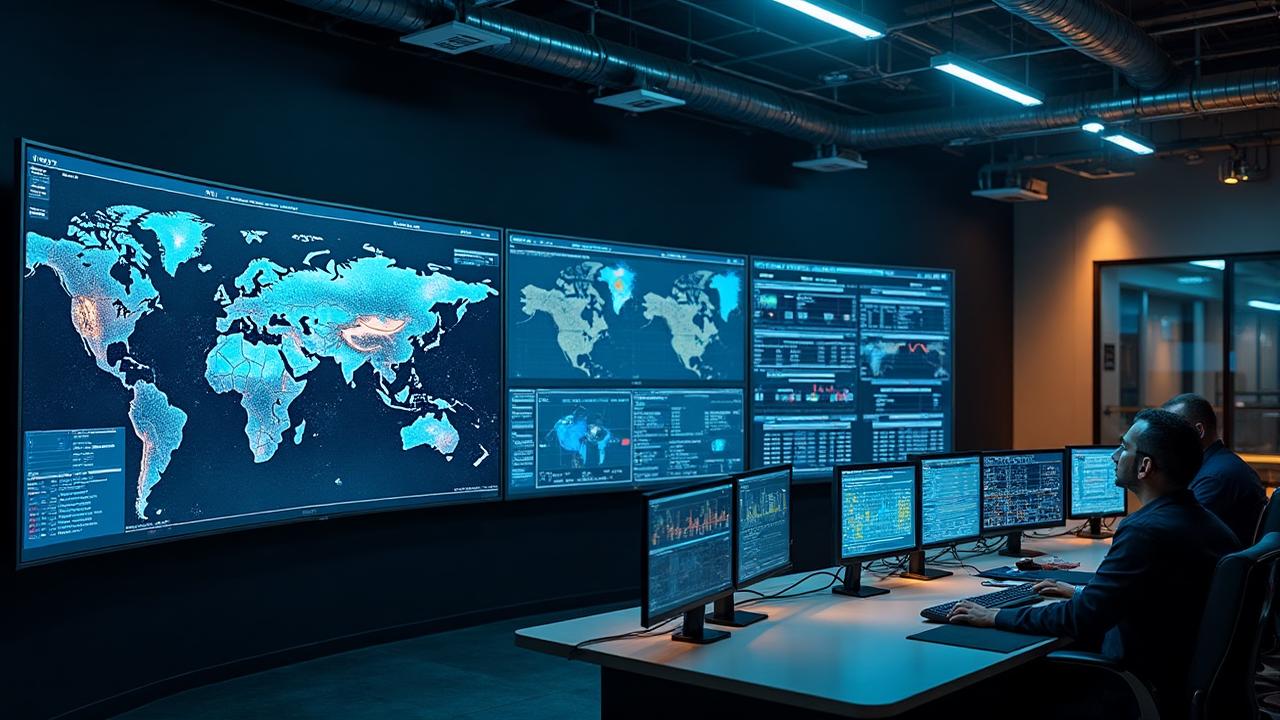
Installed Base & Warranty Intelligence
Improve service planning, warranty performance, and parts readiness
How we solve it
We connect ERP, CRM, and service data into a unified installed base model. We identify high-risk units, forecast warranty exposure, and surface service opportunities.
High-level project plan
| Phase | Description | Key Deliverables | Duration |
|---|---|---|---|
| 1. Data Mapping & Alignment | Map data sources to a unified installed base model. | Installed base schema + mapping | 3 weeks |
| 2. Data Preparation & Quality Checks | Clean duplicates, missing data, inconsistent records. | Clean installed base dataset | 3–4 weeks |
| 3. Analytics & Risk Modelling | Build dashboards + warranty risk models. | Warranty risk model + insights | 4 weeks |
| 4. Pilot with Selected Region | Apply insights to target customers or product families. | Pilot results + actions | 4 weeks |
| 5. Review & Scale Decision | Measure impact and define rollout. | Impact summary + roadmap | 2 weeks |
You'll walk away with: A working installed base intelligence capability and a clear path to scale.
Common thread across all three
Use existing data
No new CapEx
Deliver results fast
8–12 weeks
Build a foundation
For scaling AI across operations and service
Why it works
No matter where you start - enterprise or operational - the philosophy is the same:
Start small. Learn fast. Scale what works.
It's how we turn clarity into measurable outcomes.
Scale and embed, build an AI program
You've seen what works - now it's time to scale. We help you build the structures, governance, and capabilities required to make AI a sustainable part of how your business operates, across factories, fleets, and service teams.
We help you:
Establish secure, enterprise-grade AI environments
Develop training, governance, and adoption programs
Scale proven use cases across functions, sites, and product lines
You'll walk away with:
A long-term AI capability with clear governance, measurable impact, and responsible adoption.
Talk to an Expert
Let's discuss how we can help you move from strategy to proven results.
Schedule a Call